
Structure and routine matter in training. A consistent rhythm tells people what to expect, and predictability lowers the friction of showing up. But routine is not the same as monotony — nobody wants the identical format every week. Balancing structure against variety is what keeps a group invested rather than merely present.
That balance is hard to hold when the default format is someone talking over slides. Varying the activity is what sustains attention across a session, and it is where the REACHUM Dashboard earns its place: the gamification features supply variety without adding preparation time.
Two of them do most of the work: Tap Tap and the Memory Matching Game. Both are low-stakes, both take minutes to build, and both turn a passive stretch of a session into active participation.
Why Gamification Works in Workplace Training
Gamification — applying game elements in non-game contexts — is among the better-evidenced tactics in learning design. A meta-analysis of 41 studies covering more than 5,000 participants found a large overall effect on learning outcomes. Leaderboards, scoring and real-time feedback are not decoration; they change how much attention people give the material.
Two findings matter especially here. A separate meta-analysis on behavioural change found gamification effects were stronger with adults than with K-12 learners, and that short interventions — days rather than weeks — outperformed long ones. That is close to a description of a well-run training session: adults, short bursts, immediate feedback.
The other advantage is pace. Gamified activities let people work at their own speed under low pressure, which matters more at work than in a classroom — nobody wants to look slow in front of colleagues they will be sitting with again on Monday. Meanwhile the leaderboard gives the competitive members of the group something to chase. Tap Tap and Memory Matching serve both temperaments inside the same activity.
Tap Tap: A Tool for Active Engagement
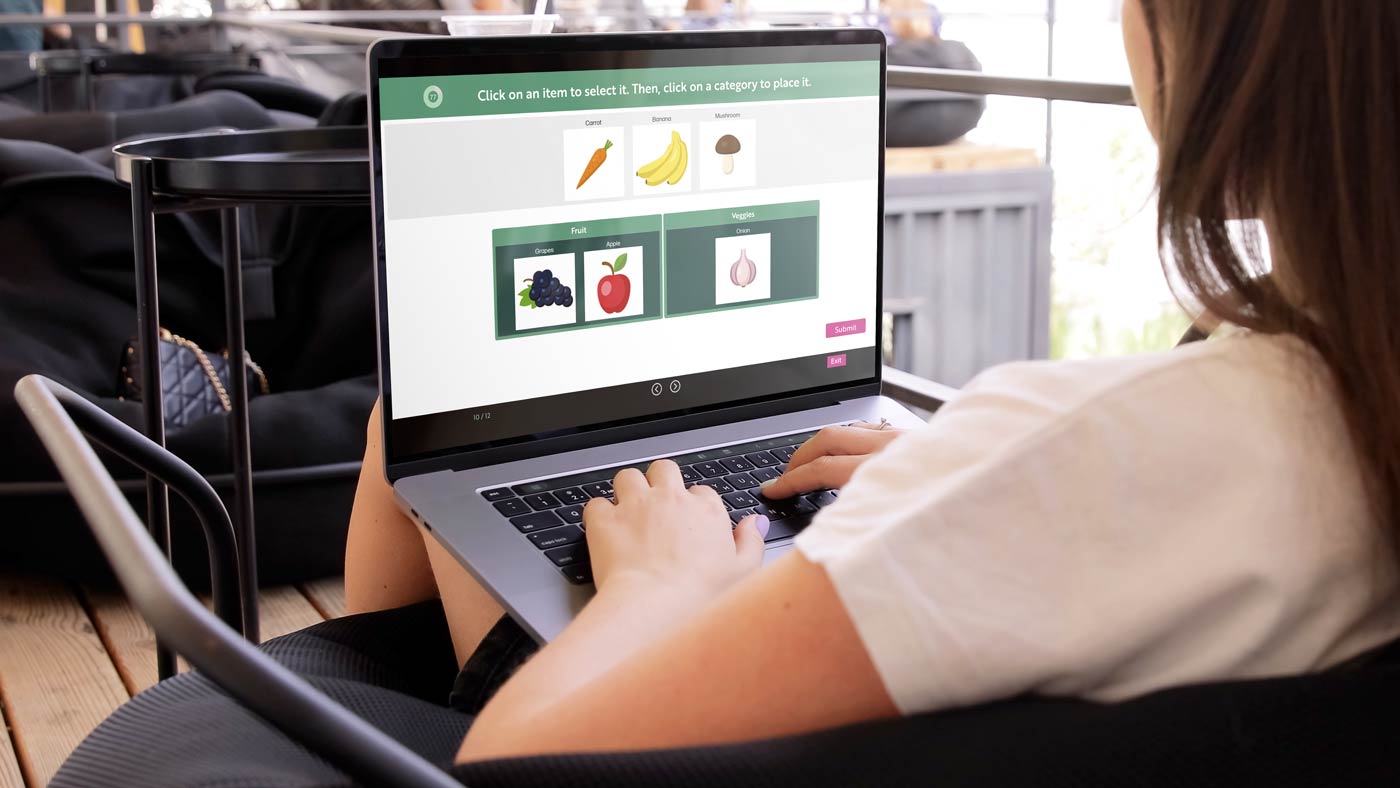
High level interactivity turns learners from passive watchers into active participants.
Tap Tap asks a learner to tap a word or image on their screen and drop it into a category or against a matching term. It is fast, it takes seconds to understand, and it adapts to almost any content people need to sort, group, or tell apart.
How Tap Tap Works
Progress is tracked automatically. Answers are scored and corrected in real time, so feedback lands while the reasoning is still fresh. When everyone has finished, you can display the answer slide for a group review — the natural moment to move from individual practice into a discussion of the two or three items most people got wrong.
Applications at Work
The obvious use is terminology. Reps sort product names against indications, or match a claim to the evidence that supports it. Support teams group error codes by the system that produces them. New hires sort tools, teams, or approval steps into the right column while the org chart is still unfamiliar.
It works just as well on judgment rather than recall. Sort a list of statements into approved claim and off-label. Sort customer remarks into price objection, risk objection, and timing objection. Categorising forces a decision, and the decision is what reveals whether someone actually understands the distinction.
Memory Matching Game: A Modern Twist on a Classic
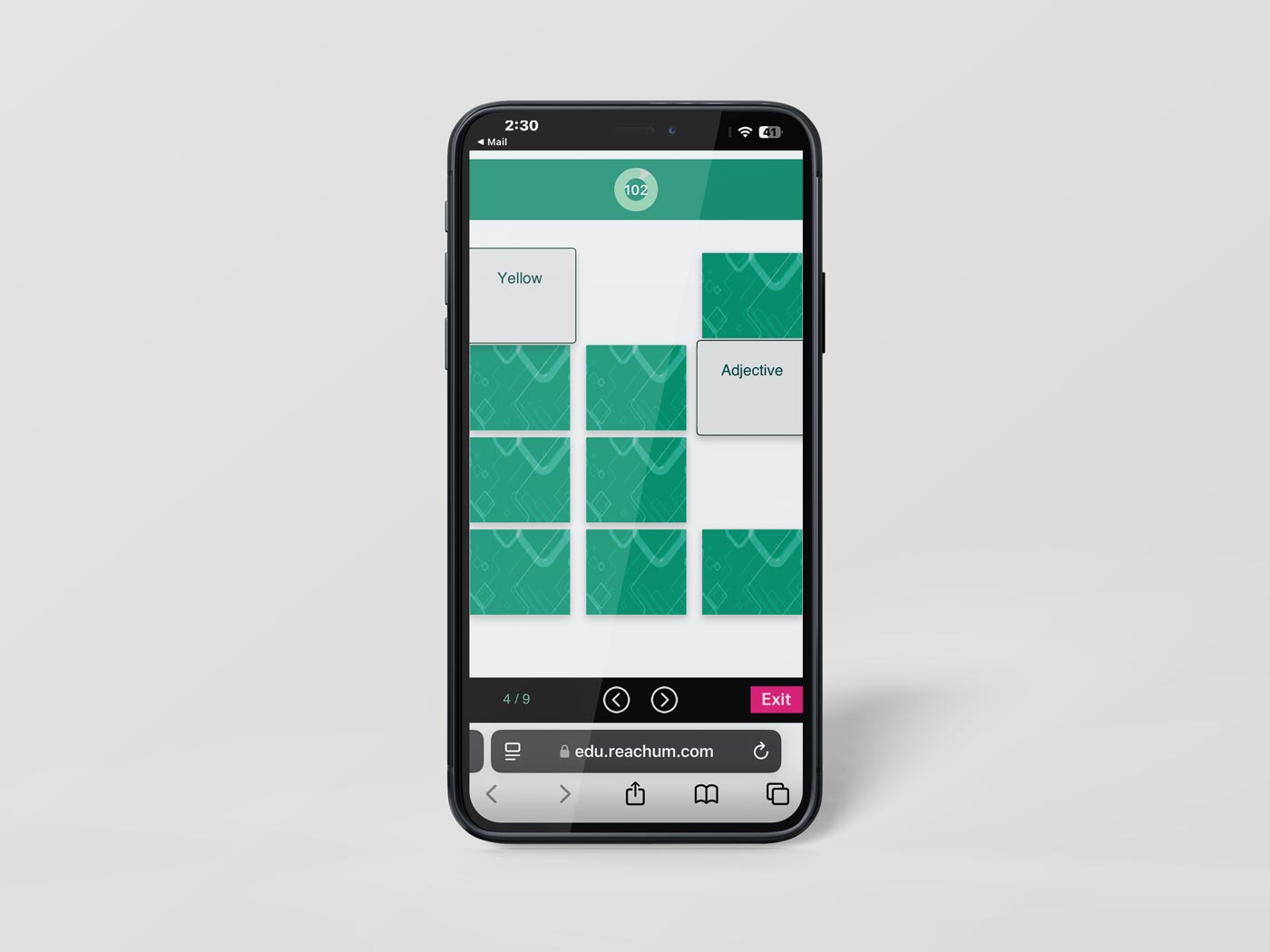
Memory Matching works on any pair your team needs to know cold — policy and situation, feature and benefit, code and fix.
The Memory Matching Game works like the childhood version — flip cards, find pairs — except the pairs carry real content and you control both sides of every match.
How Memory Matching Works
Learners see a grid of face-down cards, each holding a word, phrase, or image. A correct match clears the pair. You customise the content, so the same mechanic covers everything from terminology drills to conceptual review.
Creative Uses for Memory Matching
It is at its best on pairs people are expected to know cold: a policy and the situation it governs, a feature and the benefit you lead with, a drug name and its indication, an error code and its fix, a regulation and the behaviour it requires. The format rewards recall rather than recognition, which is the harder and more useful of the two.
It also earns its keep as an icebreaker in week one of onboarding — matching a colleague's name to a fact about them does more for a distributed team than another round of introductions.
Meeting the Needs of Different Learners
The strength of both games is that they serve two temperaments at once. Some people do their best work in quiet, low-stakes repetition. Others need a score to push against. One activity covers both.
Low-Stakes Practice
Both games let people work through content at their own pace, which matters most for the ones who would never volunteer an answer in front of the group. Low-stakes retrieval reduces the anxiety that suppresses performance, and repeated retrieval is what moves knowledge into long-term memory.
Engaging Competitive Learners
For the competitive members of a team, the leaderboard does the work. Tracking score and speed gives them a reason to run the activity a second time — and the second run is where it consolidates.
Conclusion: Structure and Variety, Together
Tap Tap and Memory Matching combine structure, variety and engagement in a single activity. They suit people who prefer quiet independent practice, and they give competitive learners a score to chase.
Used regularly, the effect shows up as participation you can see and retention you can measure — the difference between a session people attended and one that changed what they can do.