Your training completion reports look great. 94% finished the module. Quiz scores averaged 82%. The records are clean.
Now ask the harder question: can they actually do the job?
That gap — between completed and capable — is what microlearning was built to close. Short, focused, active learning that produces real skill instead of seat-time. The research is now a decade deep, the format has been validated across industries, and AI has changed what's possible at the delivery layer.
This is the case for microlearning in 2026 — what it is, why it works, and what changes when you add intelligence to it.
What is Microlearning?
In the words of workplace training expert, Sharon Tipton,
“Microlearning is short bursts of focused, bite-sized content to help people achieve a specific outcome.”
Small bite-sized pieces of information prevent learners from being overwhelmed. Microlearning sessions are meant to be brief, but Tipton explains that
“Microlearning isn’t about time. It’s about short, specific content. If that content ends up being 8 minutes, 12 minutes, 4 minutes, 3 minutes that’s fine…whatever is suited for the content itself.”
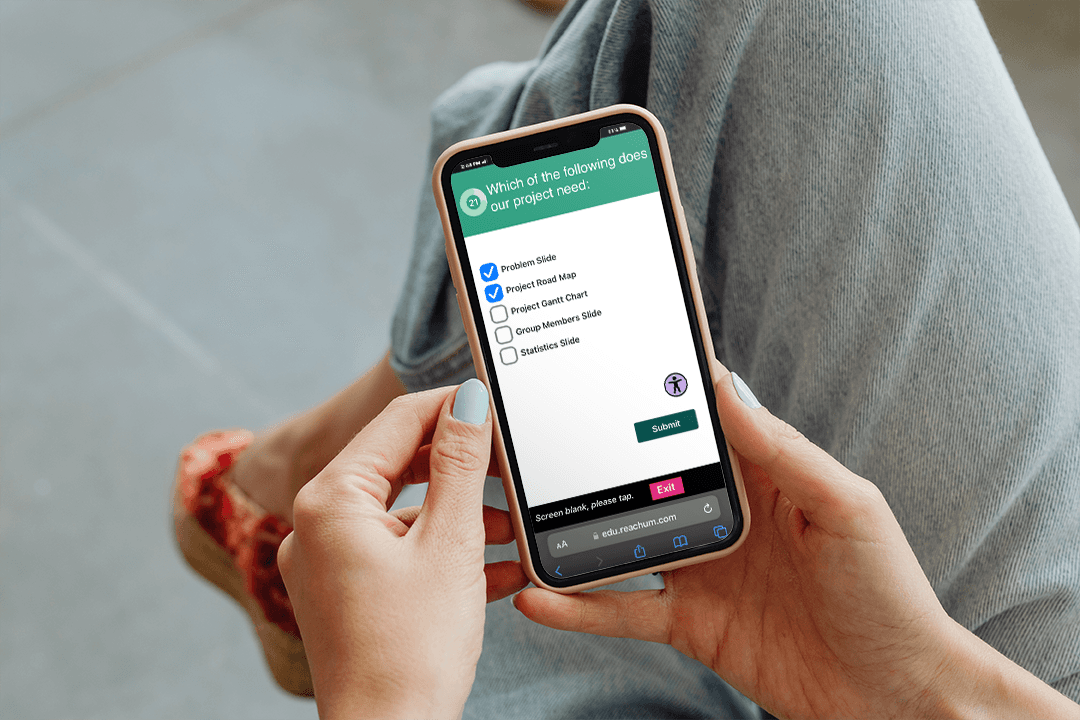
Microlearning often involves some type of interactive element such as a game, quiz, or activity. These interactive elements not only ensure learners stay engaged for the entire session, but also reinforce what they learned, extending message retention. The bonus is that facilitators see results data immediately, that indicating whether their learning goals have been met.
The Science of Attention
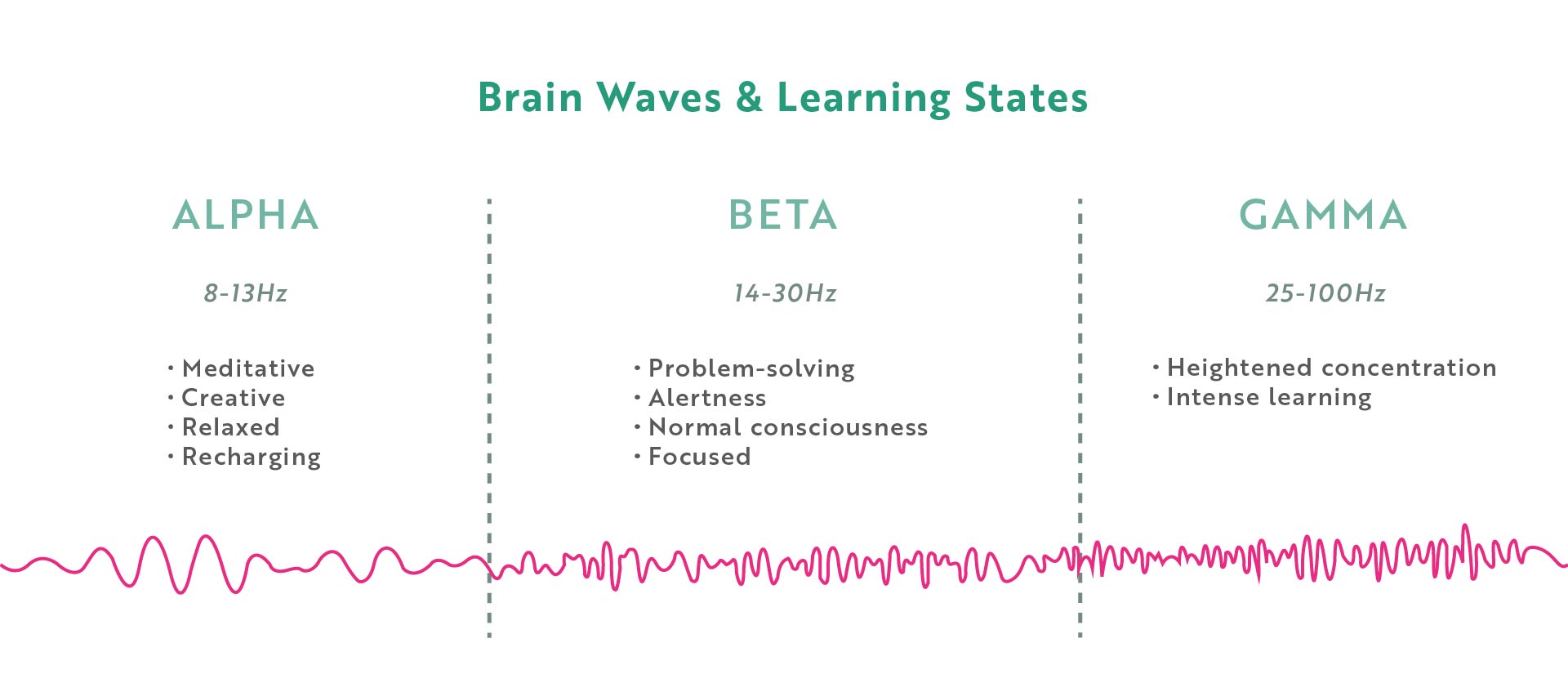
Microlearning is effective in keeping participants engaged because it takes into consideration the way our brains function. Scientific American explains when you are focused and engaged in mental activity, your brain produces beta waves. However, when your attention starts to dwindle, the brain switches from producing beta to alpha waves, an indication that your brain is in an idle, trance-like state, rather than a thoughtful state with active cognition, the state necessary for long term message retention.
Microlearning hacks the brain by increasing beta waves, the natural result of physical activity. Even something as simple as a button click lifts beta waves and keeps users in an attentive state.
Benefits of Microlearning
Through interactive and succinct lessons, microlearning keeps learners engaged for hours instead of minutes. Randall Tinfow, CEO of REACHUM, has spent 40 years building video-based training and credits microlearning as the structural shift that finally made learning measurable.
Tinfow explained how he used microlearning principles to increase engagement in a project he did for the United States Golf Association. The USGA posted twelve videos to YouTube to explain the Rules of Golf. Despite each video being 3-4 minutes long, the average view time was only 38 seconds. Although the videos were of exceptional quality and featured the stars of golf, people exited the videos in less than a minute.
To keep people engaged, Tinfow applied the principles of microlearning to make the videos more interactive and involving. In the first minute of each video a scenario was shown, with the audience offered for multiple choices to a rules interpretation. Rather than getting an immediate right or wrong response, viewers were encouraged to watch the rest of the video to discover the answer. At the end of the video the first question was reprised, followed by two more quizzes. The questions provided interactivity that got viewers participating. According to Tinfow,
“Engagement increased ten times, to more than eight minutes, because the fun challenges of the first module encouraged users to keep going. All the metrics improve when users become actively involved in quick bursts of gamified learning.”
Just-in-Time Training
Microlearning is especially useful when it comes to just-in-time training, a type of learning that involves teaching someone something they will put into practice immediately. Microlearning is compatible with just-in-time training because it allows learners to get access to the information they need on demand. Tipton, who often works with clients in sales, notes “sales teams in particular don’t have time to go and sit in front of a computer and take a course,” and instead, need a way to get crucial information in a format that allows them “to watch and go.” Microlearning allows the necessary content to be absorbed quickly, so workers can immediately put what they have learned into action.
Keep Up to Date with Best Practices
Microlearning lessons are a great way to keep employees up to date on best practices or the newest information in their field. Michael Corcoran, math and science supervisor for Wilkes-Barre Area School District, says he has used microlearning in the past to coach teachers on using best practices when instructing students. The microlearning sessions were held monthly and lasted for ten minutes in the morning before students arrived at school.
In these microlearning sessions, Corcoran instructed teachers on using the 5E’s (engage, explore, explain, extend, evaluate) for writing lesson plans, a research-based model to help teachers focus on student learning and to have students more actively engaged in the lesson. Across five sessions, he focused on one component of the 5E model each session. He also presented discrepant events, a surprising outcome to a science demonstration, that teachers could immediately go back to their classroom to use.

Corcoran encouraged participation and interaction from teachers by asking them to share hands-on activities that they had recently done in their own classrooms. Corcoran described his sessions as “quick hitting” and noted that teachers “didn’t have time to get off task or be bored.”
Greater Learner Satisfaction
Corcoran noted that his microlearning sessions were not only effective, but also that teachers appreciated their brevity. Many teachers noted that they enjoyed the short and to-the-point meetings over the hours-long professional development sessions that they have experienced in the past.
Corcoran notes,
“Unless you’re a great storyteller or you can sing and dance, it’s hard to keep people’s attention for a long time.”
His meetings were just the right amount of time to keep teachers interested and get his points across. He noted that it was also easier for him as a presenter to prepare for several shorter meetings than a longer meeting.
Embracing Technology
Some of microlearning’s success can be attributed to the fact that it does not shy away, but rather embraces technology. Tinfow explained that one of the biggest issues for workplace trainers share is device distraction. During in-person classes, teachers report that only 20-25 percent of students are paying attention. In remote classes the numbers are half of that. In a test of a legacy system, only 7 out of 86 students in a live, remote onboarding session were actively engaged at the 12 minute mark.
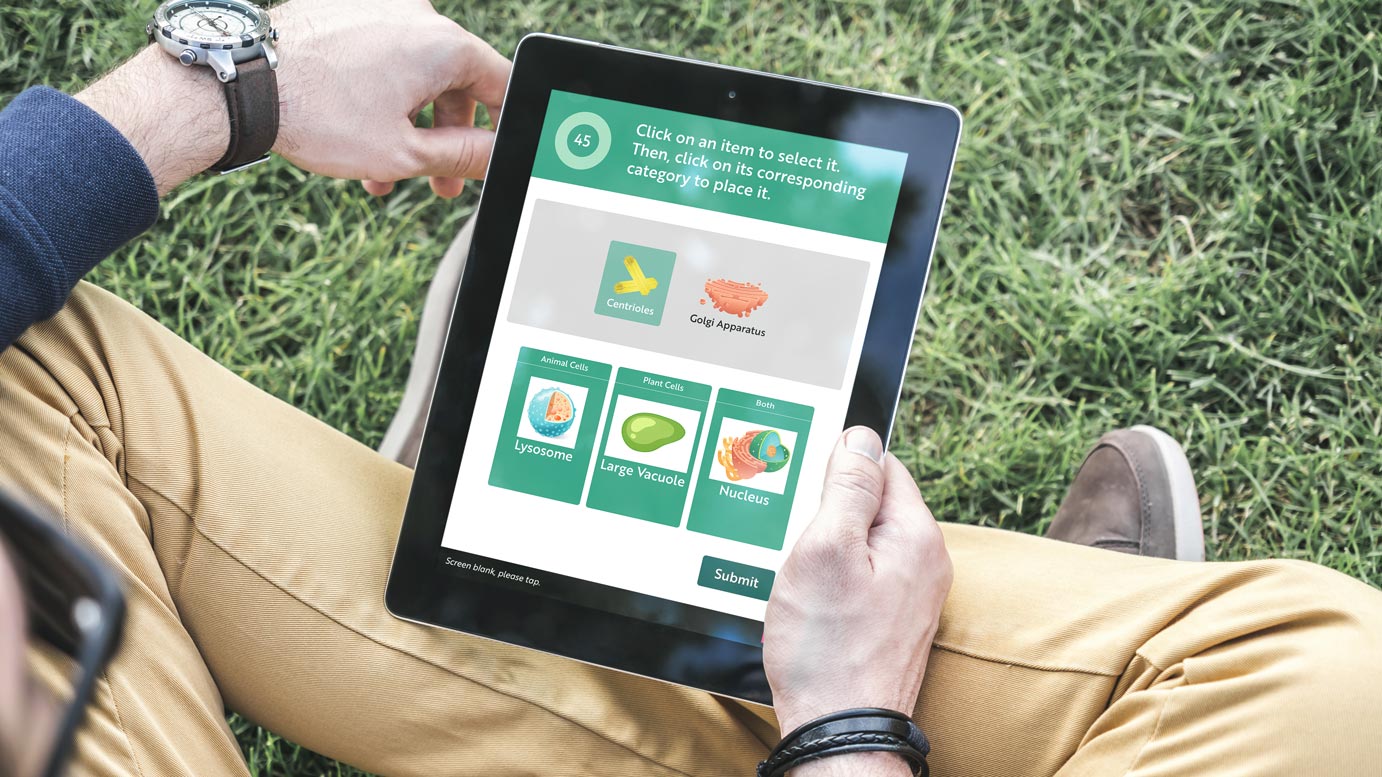
Rather than allowing cell phones to distract learners, REACHUM has had success by using microlearning for synchronous as well as asynchronous lessons. The trick is to compel high frequency activity.
Tinfow explains,
“We’re co-opting that space the has been occupied by social media and notifications, and trainers love it. They’re sustaining classes for three hours with 80 to 85% attention instead of 20 to 25%. It’s a game changer. And trainers can immediately see if students are distracted using a real-time dashboard.”
Additionally, Tinfow points out how our rapidly developing technology lends itself to being used for microlearning. He contends, “think about the invention of augmented reality, virtual reality, things that are happening in AI – all of those things are very well-suited to microlearning and delivering microlearning into the workflow.”
Tinfow asserts that advances in technology will not only contribute to the continuation of microlearning in the future, but will also lead to evolutions in the learning method. He states, “I think the world of microlearning is going to continue to roll forward, but also it’s going to expand to look like things I can’t even imagine right now.”
What Changes When You Add AI
Microlearning works because it matches how attention actually behaves. AI changes what each of those short, focused moments can do.
A traditional microlearning module is a fixed asset — same content, same questions, same path for every learner. It works, but it doesn't adapt. AI-powered microlearning closes that loop. The module observes how the learner is performing, surfaces the next concept based on where they actually are, and — in the case of conversational role-play — lets them practice the skill instead of just reading about it.
Three concrete shifts:
From content to conversation. A two-minute video about handling a customer objection becomes a two-minute conversation practicing that objection, with feedback the learner couldn't get from a quiz.
From completion to capability. AI-graded interactions produce the kind of behavioral signal that completion checkboxes can't. You see whether the learner can actually apply the concept, not just whether they finished the screen.
From static to current. Field intelligence — new product details, updated compliance language, a competitor's repositioning — can be deployed into microlearning modules in hours, not the weeks a traditional course rebuild requires.
The principles haven't changed. Bite-sized, focused, active, frequent. AI just makes each of those bites measurably more useful.
Going deeper: AI Microlearning: What Changes When You Add Artificial Intelligence?
Increased Retention
According to a study done by the National Institute of Health, people forget over 50 percent of what they learned just 20 minutes after the lesson ends due to a phenomenon called the “forgetting curve.” Microlearning has been proven to be an effective way of combating this loss of information.
Microlearning aids in the process of converting information from short to long-term memory by having individuals take in one piece of information at a time. Additionally, breaks between bursts of learning help individuals metabolize what they have learned. Rather than being expected to dedicate every detail of an hour-long lecture to memory, microlearning only requires you to focus on one small burst of information at a time leading to higher retention rates.

Live Microlearning
Microlearning has long been used as an on-demand, asynchronous learning modality. It’s attraction is that learners can watch at their own pace to fit their busy schedule.
The trend is towards live, synchronous microlearning. To explain the value of live microlearning, Tinfow says,
“Live training, whether in-person or remote, training, provides teachers with real-time data indicating exactly how much of the message has gotten through. They can identify students that are having an issue or not getting the message and fix it immediately. By the end of the class, everybody is in-sync, and up-to-speed.”
Thus, live microlearning lends itself to higher engagement than asynchronous methods. Tinfow points out,
“Who wants to watch a 2 hour video of a talking head?”
Additionally, live microlearning allows for hands-on learning. Tinfow notes,
“You could create job aids or handouts you can use in a live setting that people can take away and make use of later…or you could even have them create their own microlearning element.”
Tinfow suggested ending a session by having class members work in groups to create an infographic about the most important things they have learned.
Reduced Time and Cost
According to the Health and Safety Institute, microlearning sessions take 300 percent less time to create and cost 50 percent less than traditional learning methods. Since microlearning requires little time and resources, it is extremely cost-effective. Additionally, it will not take employees away from their work for long periods of time.
What 2026 Actually Demands
Microlearning isn't a 2023 trend anymore. It's the default architecture for workforce learning that has to produce measurable capability — and that pressure is only increasing.
Three forces are converging:
Faster business cycles. Product launches, compliance updates, and competitive positioning shifts now move in days, not quarters. Training has to keep pace.
Higher accountability. Boards and regulators want proof of competence, not records of attendance. Microlearning's per-interaction data trail is what makes that proof possible.
AI-native learners. The workforce now expects training to behave like the rest of their software — adaptive, on-demand, conversational. Hour-long talking-head webinars feel like artifacts.
The companies treating microlearning as a delivery format are getting incremental wins. The ones treating it as the foundation of a measurable capability system are building durable advantage.
See how REACHUM does this
→ Try an AI role-play simulation — Two minutes. No setup. Practice a real sales, customer service, or healthcare scenario.
→ How REACHUM works — The decision-grade data layer underneath the activities.
→ Read the AI microlearning guide — The deeper dive into what AI changes.